Joint pain, stiffness and swelling can make life hard. Many people seek natural remedies when pain relievers start doing more harm than good. Two popular herbal supplements, curcumin (from turmeric) and boswellia (from frankincense resin) have long been praised for easing joint pain and inflammation. But which is better for your knees, or hips? As of 2026, recent research sheds new light on how these supplements really work. In this article, we’ll break down the latest findings on curcumin and boswellia for joint health, explain their benefits, and help you choose wisely. Both herbs have science backing them, but they excel in slightly different ways. Let’s dive in.
What Are Curcumin and Boswellia?
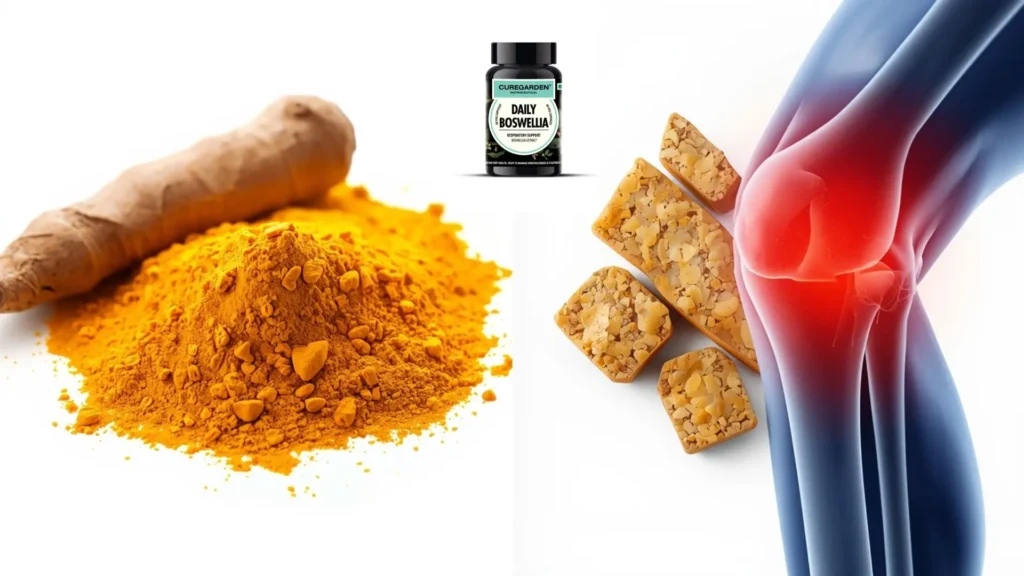
Curcumin is the vibrant yellow bioactive ingredient naturally found in turmeric. It is a plant based polyphenol known for its strong anti-inflammatory and antioxidant properties. People use turmeric or curcumin supplements to calm swollen joints. Boswellia, also called Indian frankincense, is a resin harvested from the Boswellia serrata tree. Its bioactive ingredients are boswellic acids (like AKBA) that block inflammation and pain signals. In Ayurvedic medicine, both have been used for centuries to support painful joints. Modern science shows boswellic acids even inhibit molecules called leukotrienes that trigger inflammation. So in short: curcumin fights inflammation broadly (like an antioxidant), while boswellia directly blocks inflammatory enzymes.
- Curcumin (Turmeric extract): A yellow spice compound with well-known anti-inflammatory activity. It modulates multiple inflammatory pathways in the body. Curcumin is safe in moderate doses and can reduce joint pain and swelling.
- Boswellia (Frankincense resin): A gum resin rich in boswellic acids. It inhibits leukotrienes (inflammatory messengers) and other enzymes tied to arthritis pain. Boswellia extracts relieve pain and stiffness without common side effects of NSAIDs.
These two herbs both target inflammation, but in slightly different ways. Curcumin works as a general anti-oxidant/anti-inflammatory, while boswellia’s acids turn off specific pain producing pathways. Understanding their actions helps explain why one might work better for certain symptoms.
Curcumin for Joint Pain and Inflammation
Curcumin’s star power comes from its strong anti-inflammatory effects. Studies show that curcumin reduces pain signals and inflammation markers in arthritis. It can quiet over active immune cells and enzymes (like COX 2) that cause joint swelling. In practice, curcumin supplements have been shown to ease arthritis pain. For example, a 2018 systematic review found curcuminoid extracts (standardized turmeric formulas) significantly cut pain and improved function in knee osteoarthritis patients. In fact, curcumin often performed as well as some NSAID drugs for pain relief, but without the stomach side effects.
Recent trials continue to back this up. A 2025 network meta-analysis of turmeric products found all tested curcumin formulations lowered joint pain scores (WOMAC) significantly. Even at placebo comparable levels: enhanced curcumin (with piperine or nano form) achieved about a 30% drop in pain vs. placebo, meeting clinical improvement thresholds. Overall, curcumin is considered safe and effective for joint pain. It’s well tolerated at typical doses (often 500mg twice daily of a bioavailable extract).
Key points on curcumin:
- Strong anti-inflammatory: It calms multiple inflammation pathways. This cuts swelling and pain in joints.
- Pain relief: Research shows curcumin supplements significantly ease arthritis pain. One analysis noted curcumin was far better than placebo for knee pain, similar to standard painkillers.
- Safety: Unlike many drugs, curcumin does not cause major side effects. Studies report no increase in adverse events compared to placebo.
In simple terms, curcumin is great if pain relief is your goal. It helps soothe aching joints and fights inflammation at the source, making movement less painful.
Boswellia for Joint Stiffness and Mobility
Boswellia’s claim to fame is its strong anti-inflammatory and anti-arthritic actions. The boswellic acids in frankincense directly block enzymes (like 5 LOX) that make inflammatory chemicals. This action reduces joint swelling and prevents cartilage breakdown over time. Clinically, boswellia supplements have been shown to ease joint pain and improve function too.
For instance, a 2024 meta-analysis of boswellia (nine trials, 712 patients) found boswellia significantly lowered pain and stiffness scores in osteoarthritis. In that review, people taking boswellia had much better VAS pain and WOMAC scores than those on placebo. A standout result was with a branded extract (Aflapin®) which dramatically cut pain and stiffness compared to other forms.
Even more convincing, a recent Frontiers clinical trial followed arthritis patients for 90 days on boswellia. By the end, knee pain scores had dropped by 45–62%! There was a 65–70% improvement in stiffness and mobility, along with a noticeable increase in walking capacity.The researchers concluded boswellia was “safe and effective” for joint health and mobility. They saw benefits in just 5 days, growing stronger by month 3.
Key points on boswellia:
- Reduces inflammation: Boswellic acids target leukotrienes and other mediators. They act like a smart anti-inflammatory, without the side effects of drugs.
- Improves stiffness and function: Clinical trials show boswellia eases stiffness and boosts joint mobility. For example, in 3 months it cut WOMAC pain/stiffness/function scores by ~70%.
- Mobility support: People on boswellia can often bend and walk easier. A study even noted significant gains in walking distance at 90 days.
- Safety: Boswellia is well tolerated. Trials report no serious adverse events.
So boswellia stands out for improving stiffness and mobility in joints, in addition to cutting pain. If your joints feel tight and you struggle to move, boswellia is especially helpful.
Curcumin vs Boswellia: How Do They Compare?
Both curcumin and boswellia are effective natural remedies for arthritis, but they shine in slightly different ways. Put simply:
- Pain Relief: Curcumin takes the lead here. The latest network review (2026) found curcumin formulas significantly cut pain (VAS scores) compared to placebo. Boswellia also cuts pain, but its standout benefit was on function. Both herbs beat placebo on pain, though, so both help in this area.
- Stiffness & Mobility: Boswellia has an edge. The same 2026 analysis showed boswellia significantly improved WOMAC stiffness and function scores (i.e., joint mobility). In other words, boswellia helped people move more freely. Curcumin helps too, but boswellia’s effects on stiffness were more pronounced.
- Inflammation: Both herbs are powerful anti inflammatories. Curcumin is a broad spectrum anti-inflammatory and antioxidant, whereas boswellia acts on specific inflammatory pathways (leukotrienes, etc.). Both address the underlying causes of joint inflammation, though they work through different mechanisms.
A helpful way to remember: “Curcumin for pain, Boswellia for stiffness.” For example, one study noted curcumin’s primary benefit was reducing pain severity, while boswellia’s primary benefit was boosting joint function. Another review similarly concluded both improved symptoms versus placebo.
In bullet points:
- Curcumin: Best at cutting pain quickly. Great antioxidant support for joints. Proven to reduce knee OA pain scores significantly.
- Boswellia: Best at reducing stiffness and improving range of motion. Clinically shown to lower pain and stiffness scores dramatically.
Of course, every person is different. Some may feel more pain relief from curcumin, others may notice better mobility with boswellia. Encouragingly, clinical research supports their benefits and safety when taken as directed.
Combining Curcumin and Boswellia: A Powerful Duo
You might wonder: why not take both? Many joint health formulas combine curcumin and boswellia to maximize their complementary benefits. Studies suggest they can even work synergistically. One trial tested a water soluble mix of boswellia extract co delivered with curcumin. Both formulations (boswellia alone and the combined boswellia+curcumin) eased pain, but the combined formula gave even stronger relief. The authors said the co formulated product had a “synergistic anti-inflammatory and analgesic action”.
Similarly, supplement brands and Ayurvedic wisdom tout the pair as a “perfect match.” Both act on inflammation pathways, so together they cover more ground. A CureGarden article notes that using curcumin with boswellic acid significantly reduced pain symptoms in osteoarthritis patients, with no side effects. In simple terms, when two herbs work in different ways, using them together can enhance the overall effect.
Combining tips:
- Look for combos: Some supplements pair curcumin + boswellia for broader coverage. These often also include black pepper (piperine) to boost absorption.
- Synergy: A combined approach can target both pain and stiffness. Studies saw better results when the herbs were used together.
- Safety of blends: Even when combined, both are gentle. Trials of combo products report few minor effects (like mild stomach upset).
Most experts agree that using both in a regimen is often the “best of both worlds.” For example, a review recommended curcumin and boswellia as valuable additions to arthritis care, noting they relieve symptoms while being very safe. By 2026, many joint formulas on the market (including those at CureGarden and elsewhere) feature both ingredients in one pill.
Choosing the Right Supplement
So if both have merit, how do you choose? Consider these important factors before choosing a joint health supplement:
- Formulation & Bioavailability: Curcumin on its own is poorly absorbed. Look for enhanced forms (with piperine/black pepper, liposomal curcumin, nanoparticles, etc.) that boost its uptake. When choosing boswellia, look for extracts standardized to a high AKBA percentage—around 30% is often considered ideal.Quality matters.
- Dosage: Typical effective doses are around 500–1000 mg of curcumin extract per day (divided doses), and 300–400 mg of boswellia extract (often taken twice daily). Follow label instructions. Some products may suggest higher doses for short periods.
- Brand reputation: Choose brands that have positive customer feedback and clearly disclose their sourcing practices.Some companies (like CureGarden) offer boswellia and curcumin in pure and combo formulas. Reading customer feedback can help.
- Check Interactions: Both herbs are generally safe, but if you have bleeding disorders, take anticoagulants, or upcoming surgery, talk to your doctor first. Curcumin can thin blood a bit, and boswellia might interact with anti inflammatories. It’s best to consult a healthcare professional, particularly if you are currently taking medications.
Using these herbs wisely allows you to benefit from natural joint care. Because they come in supplement form, you have the flexibility to fine-tune the dosage or introduce them one at a time. Some people start with curcumin capsules for a month, note relief, then add boswellia and see if they can cut down medications further.
Safety and Side Effects
Both curcumin and boswellia are regarded as safe when taken in supplement form. Large reviews found no significant increase in adverse events for either herb compared to placebo. Common side effects are mild – for example, curcumin may cause minor stomach upset or diarrhea in a few people, and boswellia in high doses can sometimes cause nausea or loose stools. These are rare and usually go away if you stop the supplement.
Importantly, the risk profile is much better than many prescription arthritis drugs. In the 2025 network analysis, neither curcumin nor boswellia led to more side effects than placebo. The 2024 boswellia trial reported no serious adverse events at all over 3 months.
Safety reminders:
- Pregnancy & Breastfeeding: Current evidence on the safety of curcumin and boswellia during pregnancy or breastfeeding is limited. Best to avoid or consult a doctor.
- Bleeding risk: Curcumin can slightly thin blood; use caution if on blood thinners. Boswellia may also affect clotting. If you have clotting disorders, ask your doctor.
- Medication interactions: If you take other anti inflammatories, the herbs might add to their effect. Usually this is fine (even helpful), but just check with a health professional.
For most healthy adults, standard doses (for example, 500mg curcumin twice a day, 300mg boswellia twice a day) are both safe and effective. Always follow package instructions. If you experience any new symptom after starting a supplement, stop it and talk to a doctor. Otherwise, these herbs are well tolerated ways to manage chronic joint discomfort.
Conclusion: Which Is Better for You?
By 2026, evidence strongly supports both curcumin and boswellia as valuable tools against arthritis pain. Neither is a magic bullet, but each brings unique benefits. If you had to pick one, consider your main concern:
- Mainly pain? Curcumin might give the edge. Studies show curcumin dramatically cuts pain scores and can work as well as some pain drugs.
- Mainly stiffness or mobility issues? Boswellia could be better. Its extracts greatly improved stiffness and walking ability in trials.
However, in practice many people use both. They complement each other, and combined supplements or taking one of each kind is common. This way, you get powerful anti-inflammatory action on all fronts.In summary, the “better” choice depends on you. Both curcumin and boswellia have decades of use and modern research backing them. They are safe enough to try (as long as you follow dosage) and might let you feel less pain and move more freely. For 2026 and beyond, many joint health experts will likely continue to recommend including both in a supplement regime for chronic joint issues.

 Partner
 Grandparent
 Uncle/Aunt
 Sibling
 Friend